Architecture-as-Code means you capture architecture as machine-readable, version-controlled artifacts—C4 models, ADRs, domain specs, non-functional requirements, and fitness functions—instead of slide decks that drift. Those artifacts become the source of truth for humans and AI agents: rules, specs, and CI/CD checks keep generated code inside approved boundaries so what you design stays aligned with what actually runs.
Recently, I had the pleasure of presenting at the Equal Experts event: Architecture in the Age of AI. The topic? A concept I call Architecture-as-Code, and why it's the missing discipline for making AI-assisted development truly enterprise-ready.
If you've tried "vibe coding"—giving in to the vibes and letting AI write your code—you've probably experienced the magic. You type a prompt, hit enter, and code pours onto the screen. But you've also likely experienced the "hangover" 20 minutes later when the AI hallucinates libraries, forgets context, and introduces subtle bugs.
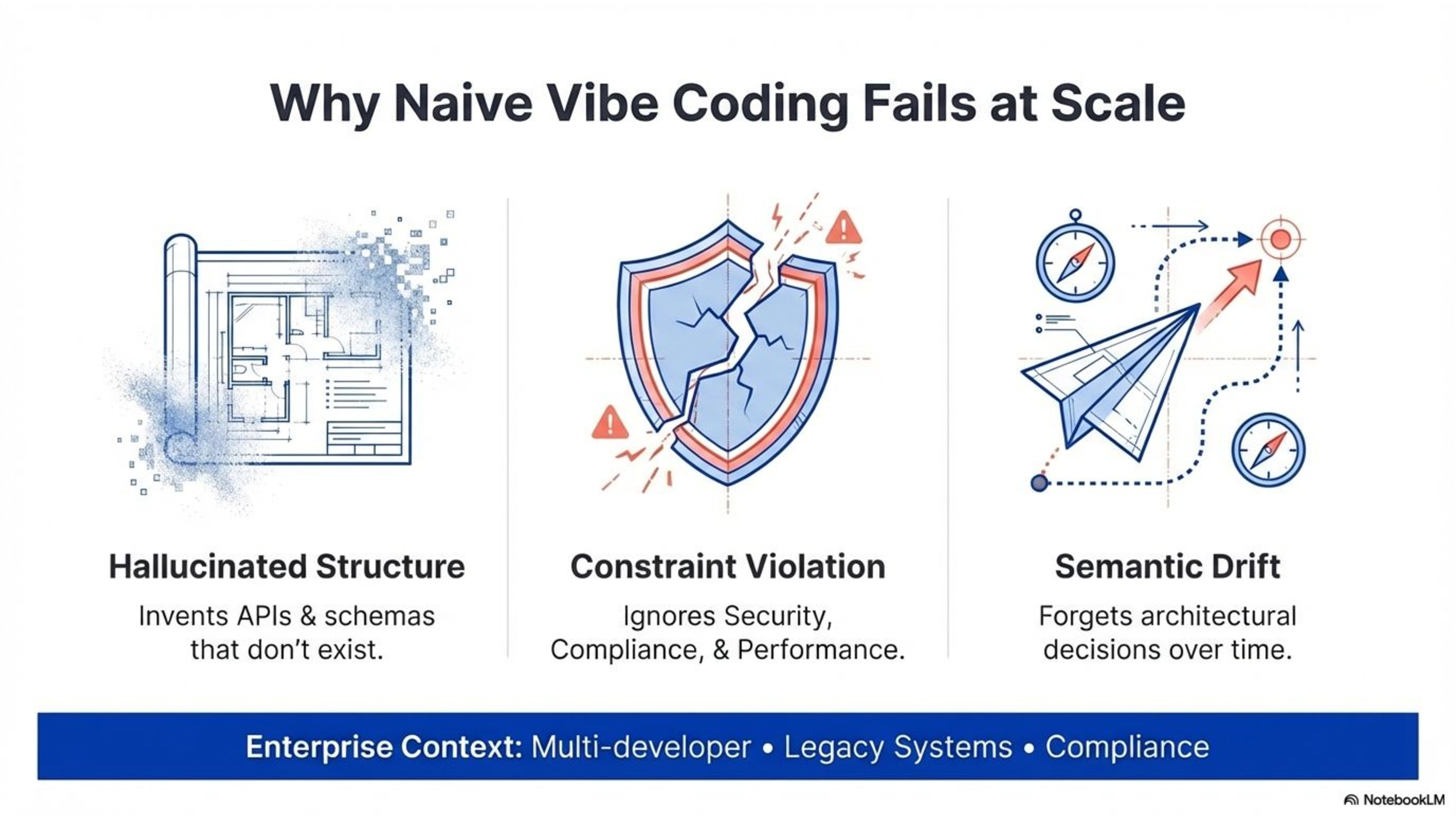
While this is annoying for a weekend project, it's catastrophic in the enterprise. Enterprise development requires architecture-first thinking, non-functional requirements (security, scalability, compliance), and collaboration across teams. Without guardrails, AI-assisted development leads to hallucinated structures, constraint violations, and semantic drift.
In my presentation, I introduced the maturity ladder for AI-assisted development, moving from simple Agent Rules to Specialized Agents, Meta-Prompting, and the Golden Trinity of Spec-Driven and Test-Driven Development. Finally, we reach Architecture-as-Code—treating architectural decisions as executable, version-controlled, automatically validated code rather than static diagrams that drift from reality.
By defining your Blueprint, Master Plan, Non-Goals, Domain Specifications, and Fitness Functions as code, you build a "prison" of constraints for the AI agent. The AI can write code at superhuman speed, but it cannot escape the architectural rules enforced by your automated CI/CD pipeline.
If you're interested in learning more about how to safely harness the power of AI in enterprise engineering, I invite you to review the materials from the presentation.
Presentation Materials
The video is not a recording of the event. It’s a separate, longer piece I made earlier that goes into Architecture-as-Code in more detail—ideal if you want to go deeper after the slides.